
Why you get pimples in
different areas of the face
Written together with skincare therapist Rebecca
Facial pimples are very common – some people struggle with them more than others. Pimples occur when the skin’s sebaceous glands become inflamed. There can be several underlying reasons, and one way to understand why pimples appear is to look at where on the face they occur.

Summary
-
The location of pimples can provide clues: in the T-zone, they are often linked to higher sebum production and clogged pores.
-
Pimples along the hairline can be triggered by hair products, on the chin often by touching the face, and on the cheeks by external bacteria from items such as phones, hands and pillowcases.
-
To prevent breakouts: maintain good hygiene (clean phone and pillowcases), use skincare products suited to your skin type, and be mindful of stress and diet.
The T-zone
The forehead, nose and chin make up the well-known T-zone — a term you’ve probably heard before. In this area, the pores and sebaceous glands are larger, which results in increased sebum production. You might wonder why we produce sebum at all. Sebum acts as the skin’s natural moisturiser, helping to keep the skin soft and protected from dryness. However, when sebum production is higher, as it is in the T-zone, pores are more likely to become clogged. The sebaceous gland then becomes irritated and infected by bacteria, leading to inflammation — and the result is a pimple.
Do you often get pimples near your hairline? If so, your hair care products may be the culprit. These products can clog pores, causing breakouts. Make sure not to neglect cleansing around the hairline.
Do you frequently get pimples on your chin but not in the rest of the T-zone? If you often sit at your computer resting your hands against your chin, this habit may be to blame. Try to keep your fingers under control and away from your face.
Products for the T-zone
As mentioned, sebum production is higher in the T-zone. That’s why it’s beneficial to spot-treat this area with products that regulate sebum production and deeply cleanse the skin.
Applying a purifying mask or scrub once a week works as a detox for the skin, helping to renew skin cells and remove excess sebum while cleansing at the same time. Apply specifically to the T-zone (forehead, nose and chin).

Pimples on the cheeks
Pimples on the cheeks are not uncommon and can be caused by several factors. A common cause is bacteria from external sources such as hands, mobile phones and dirty pillowcases. Wash your hands regularly, clean your phone (or use headphones when talking), and change your pillowcase frequently.
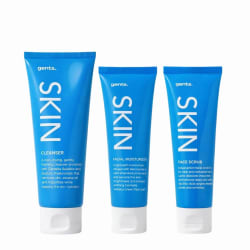
Choose a good cleanser suited to your skin type, don’t forget to moisturise, and spot-treat blemishes when they appear.
Products for pimples on the cheeks


Common causes of pimples
Pimples can, as mentioned, be caused by several different factors. Below are some of the most common:
Stress & diet
Our inner health is reflected on the outside. If you neglect your internal balance, it will sooner or later show on your skin. Stress can lead to inflammation in the body, which may result in breakouts. Try to find balance in everyday life and remember to prioritise rest and recovery.
You are what you eat — and there’s truth in that. Aim for a balanced diet, drink plenty of water and engage in regular physical activity. You’ll not only feel better, but also look healthier.
External factors
Pimples can also be caused by external influences, such as bacteria from hands, mobile phones or pillowcases. Another common cause may be the skincare products you use. Using the wrong products can create imbalance in the skin, resulting in breakouts.